The Surgeon Behind the Robot
Why Experience Matters in Robotic Surgery
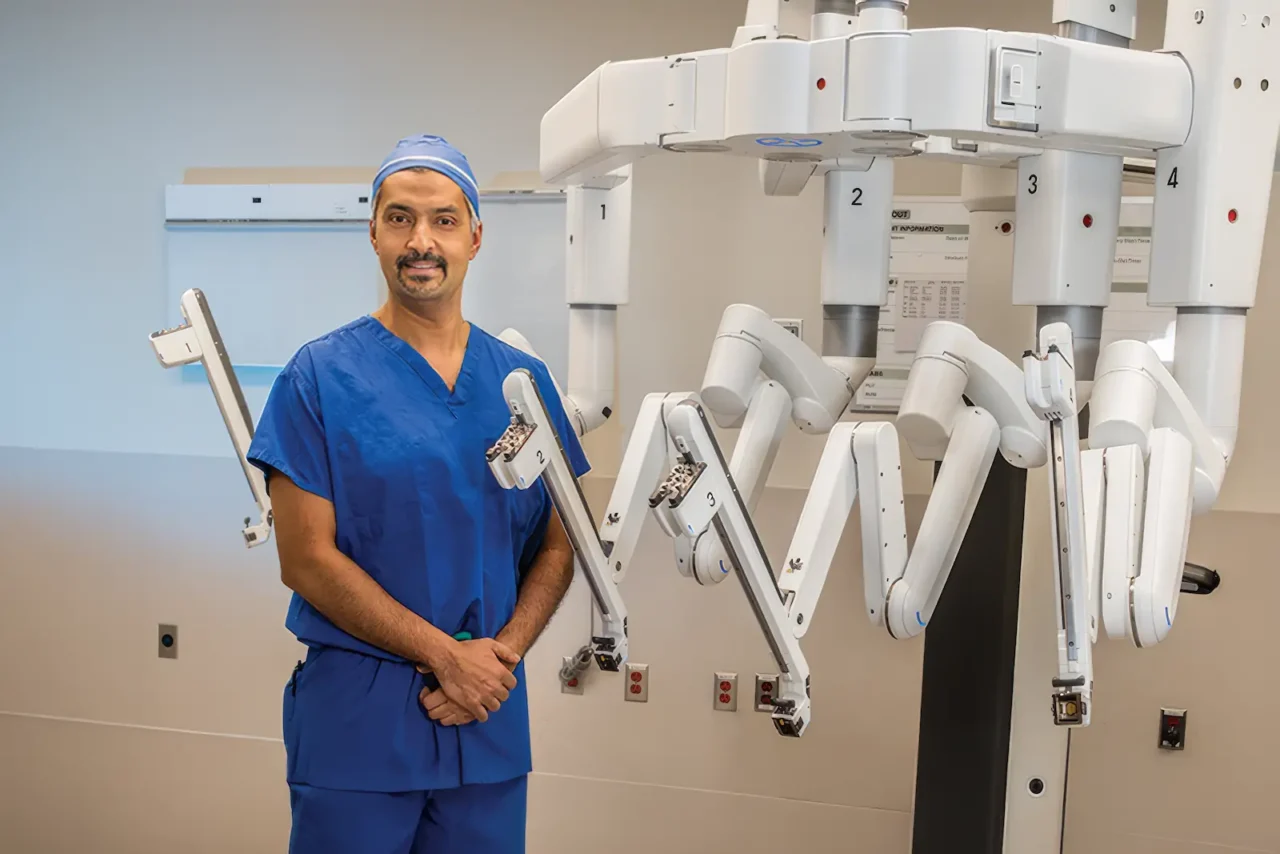
When people hear ‘robotic surgery,’ many picture a machine operating by itself. The reality is very different, and it matters when you are choosing a surgeon. The da Vinci robotic surgical system never makes a decision or a movement of its own. Every cut, stitch, and staple are directed by a surgeon seated at a console a few feet from the operating table.
That means the most important part of robotic surgery is the person at the controls. At Long Island Laparoscopic Doctors, that person is often Dr. Hesham Atwa, M.D., FACS, FASMBS, who has performed more than 2,500 robotic surgeries and over 13,000 procedures overall. Here is why that experience matters to you as a patient.
The Robot is a Tool, Not the Surgeon
According to Mayo Clinic, a robotic surgery system typically includes a camera arm and mechanical arms that hold surgical instruments. The surgeon controls those arms from a console and sees a magnified, high-definition, 3D view of the surgical site.1 The technology can give a surgeon more precision, flexibility, and control than traditional techniques allow.
But precision instruments do not create good judgment. The robot will not decide which procedure fits your anatomy, notice that scar tissue from an earlier operation has changed the plan, or recognize a problem before it becomes a complication. Those decisions belong to the surgeon. The same robotic platform in two different sets of hands can produce two very different experiences.
What the Research Says About Surgeon Skill and Experience
The link between a surgeon’s skill and a patient’s outcome has been measured directly. In a landmark study published in the New England Journal of Medicine, peer surgeons rated the technical skill of 20 bariatric surgeons using video of their operations. Researchers then compared those ratings with outcomes for more than 10,000 patients. Patients of surgeons in the bottom quarter for skill had complication rates of 14.5 percent, compared with 5.2 percent for surgeons in the top quarter. They also had higher rates of reoperation and readmission.2
Volume matters too. A 2025 review in the International Journal of Obesity analyzed 36 studies of bariatric surgery and found that higher surgeon and hospital volumes were associated with lower short-term mortality, fewer complications, and shorter hospital stays.3
In plain terms: surgeons and teams who do these operations often tend to do them better.
Every New Technology Has a Learning Curve
Robotic surgery is no exception. A systematic review of surgeons who were newly adopting robotic bariatric surgery found that operative times fell significantly as surgeons gained cases, and that the number of cases needed to reach proficiency varied widely from one study to the next.4
As a patient, you want that learning curve to be far behind your surgeon. With more than 2,500 robotic cases, Dr. Atwa is well past it. He now helps other surgeons through theirs.
What 2,500+ Robotic Surgeries Look Like in Practice
Experience shows up in ways patients may never see directly:
- Pattern recognition. No two patients have identical anatomy. A surgeon who has seen thousands of cases is better prepared for the unexpected, especially in revisional bariatric surgery, where earlier operations have changed the landscape.
- Efficiency. An experienced surgeon and operating room team work through setup and surgery without wasted motion, which can mean less time under anesthesia.
- Judgment about the approach. Robotic surgery is not right for every patient or every procedure. Experience includes knowing when it is the best choice and when another approach serves you better.
- Range. Dr. Hesham Atwa performs robotic surgery for gastric bypass, gastric sleeve, and revisional bariatric procedures. He also offers robotic hernia repair, gallbladder surgery, colorectal surgery, and Heller myotomy for achalasia.
Credentials That Reflect Real Experience
Case numbers tell part of the story. Recognition from peers tells the rest. Dr. Hesham Atwa:
- Holds the Master Surgeon in Robotic Surgery designation from Surgical Review Corporation (SRC)
- Serves as Director of Robotic Surgery and Director and Chief of Surgery at St. Charles Hospital
- Is a proctor for Intuitive, the maker of the da Vinci system, training and overseeing other surgeons who are learning robotic technique
- Hosts visiting surgeons who come to observe his robotic cases
- Is the author of the best-selling book Mastering Robotic Surgery: Ordinary Surgeons Doing Extraordinary Things, written to help other surgeons shorten their learning curve, work more efficiently, and reduce complications
Questions to ask any robotic surgeon
If you are considering robotic surgery, these questions will tell you a great deal:
- How many robotic procedures have you performed, and how many of my specific operation?
- How long have you been performing robotic surgery?
- Do you hold any robotic surgery designations, or train other surgeons?
- Is robotic surgery the best approach for my situation, and why?
- What does your team’s follow-up care look like after surgery?
Talk with an experienced robotic surgeon on Long Island
The robot is remarkable technology. The surgeon behind it is what makes the difference. To find out whether robotic surgery is right for you, call Long Island Laparoscopic Doctors at (631) 476-9296, request a consultation, or register for a free weight loss surgery webinar.
References
1 Mayo Clinic Staff. Robotic surgery. Mayo Clinic. Updated April 13, 2024. mayoclinic.org
Birkmeyer JD, Finks JF, O’Reilly A, et al.
2 Surgical skill and complication rates after bariatric surgery. N Engl J Med. 2013;369(15):1434-1442. doi:10.1056/NEJMsa1300625
3 Campione A, Nimptsch U, Eckhardt H, et al. Volume-outcome relationships in bariatric surgery: a rapid review. Int J Obes. 2026;50:33-52. doi:10.1038/s41366-025-01931-1
4 Learning curves for adoption of robotic bariatric surgery: a systematic review of safety, efficiency and clinical outcomes. 2024. PubMed PMID 39325249