⭐⭐⭐⭐⭐
“My surgery went well. The staff here were very professional, friendly, and courteous. They made me feel very relaxed, and the care was exceptional. Thank you all for all you did.”
Colorectal cancer is a serious disease, and early treatment matters. At Long Island Laparoscopic Doctors, Dr. Hesham Atwa performs colorectal surgery, including robotic colon resection with the da Vinci Xi and da Vinci 5 systems, using a robotic-first approach built for smaller incisions and a faster recovery than open surgery.

Colorectal surgery treats diseases of the colon, rectum, and anus, including colon resection, small bowel resection, and related procedures. At Long Island Laparoscopic Doctors, Dr. Atwa performs colorectal surgery for patients from Setauket, Commack, and the surrounding Long Island community.
Dr. Atwa has performed over 2,500 robotic surgeries and holds the Master Surgeon in Robotic Surgery designation. He is an appointed proctor for Intuitive Surgical, the maker of the da Vinci system, which means he trains other surgeons on the same platform he uses for your colon resection.
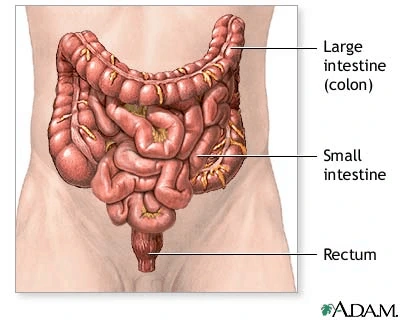
The colon, also called the large intestine, is the last stop in digestion. Food travels from the esophagus into the stomach, where your body breaks it down into liquid. That liquid moves to the small bowel, where your body absorbs nutrients and vitamins. What is left passes to the colon, which absorbs water and, with the help of resident bacteria, finishes breaking down the remaining material before it reaches the rectum, according to the American Society of Colon & Rectal Surgeons. When disease disrupts that process, symptoms can range from bleeding and cramping to blockage and cancer.
We perform colorectal surgery for a defined set of diagnoses. Not every colon condition needs an operation, and part of our job is telling you when it does not.
Colorectal cancer: Incidence has declined by 0.9% each year among older adults since 2013, but risen by 3% each year in adults age 20 to 49, according to colorectal cancer statistics, 2026. The American Cancer Society projects nearly 159,000 new cases in the US in 2026, or about 440 diagnoses each day. Surgery is the primary treatment for colon cancer that has not spread.”
Diverticulitis: Diverticulosis is having small pouches form in the colon wall, which is common and usually harmless. Diverticulitis is what happens when one of those pouches becomes inflamed or infected, and that is the condition that can require treatment. More than half of Americans older than 60 have diverticulosis, but modern estimates show fewer than 5% of them ever develop diverticulitis. Because so many people have diverticulosis to begin with, even that small percentage adds up: diverticulitis still drives more than 2.7 million outpatient visits and 200,000 inpatient admissions each year in the US.
Preparing for colon or small bowel surgery starts at your consultation, where we review your health history, current medications, and the specifics of your procedure. In the days before surgery, we typically ask you to:
Your care team gives you a written, personalized checklist at your pre-operative visit, since instructions vary based on your surgery and your health history. We are also available by phone if a question comes up in the days leading up to your procedure.
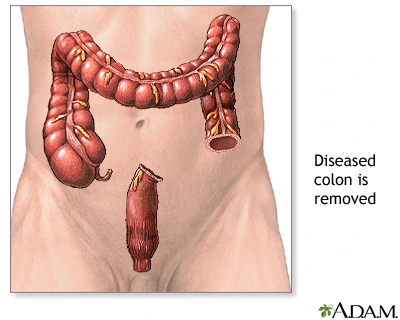
Colon resection, also called colectomy, is the partial or complete removal of the colon. It is the procedure Dr. Atwa performs most often, and we use it to treat colon cancer, recurrent diverticulitis, polyps that block the colon, Crohn’s strictures, and bleeding that will not stop.
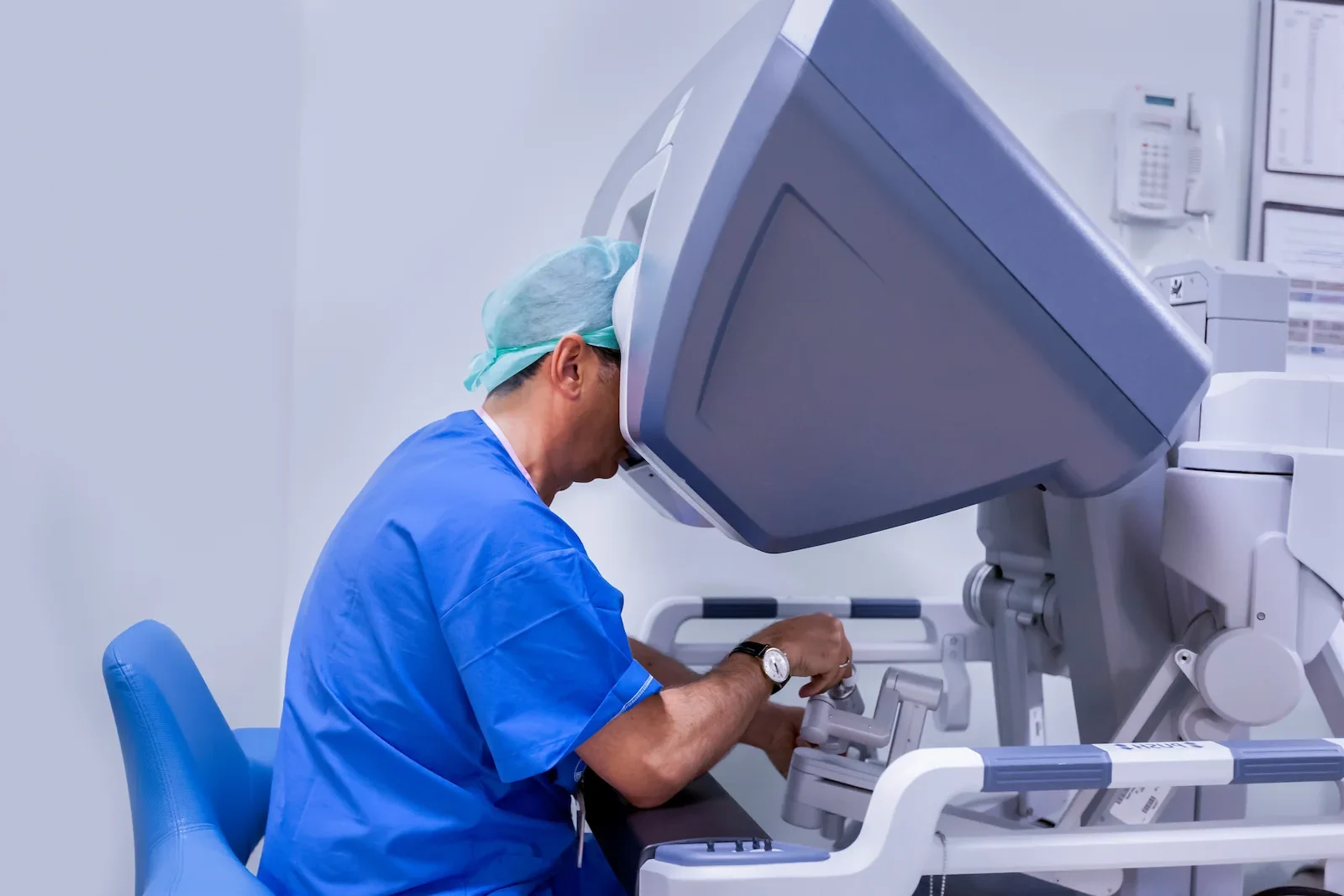
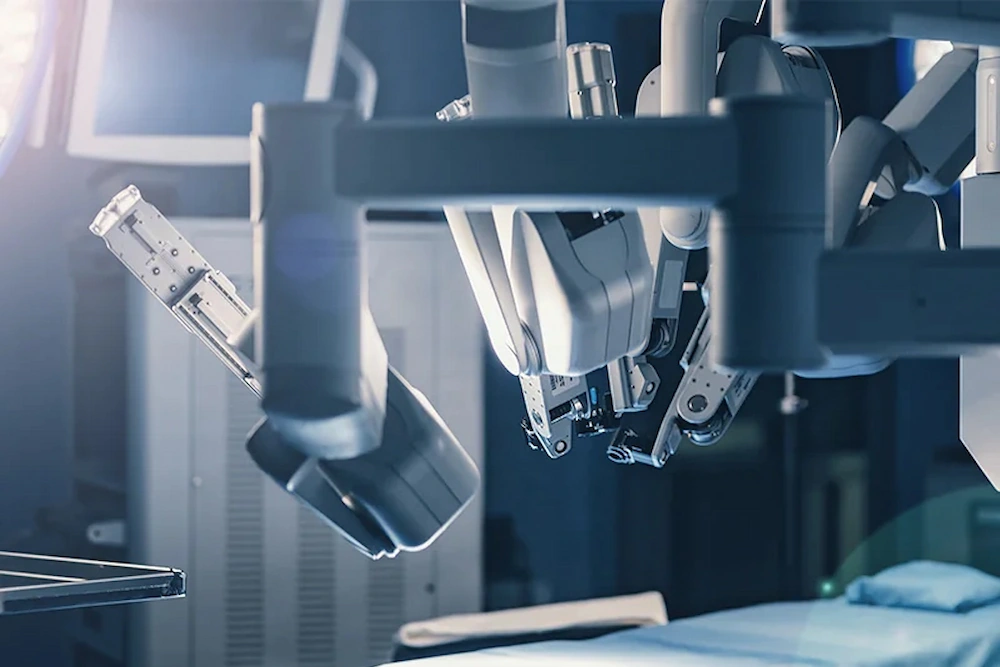
Through several small ports, Dr. Atwa docks the da Vinci Xi or da Vinci 5 system and controls wristed instruments from a console, using a magnified three-dimensional camera inside your abdomen. We free the diseased segment of colon from its blood supply, remove it, and reconnect the two healthy ends in a step called anastomosis. In most cases we sew or staple the bowel back together inside your abdomen, which typically means smaller incisions and less handling of the bowel.
If your disease is an emergency, if there is significant contamination, or if we need to remove your entire colon, we may need to bring a portion of bowel to your abdominal wall as a temporary or permanent stoma. We walk you through this possibility before surgery, not after.
“Surgery has evolved over the years. Robotic surgery has improved on those techniques.”
— Dr. Atwa
Book Online to schedule your visit now, or Request a Consultation and our team will reach out.
When your small intestine is blocked, diseased, or injured, we may remove the affected segment in a small bowel resection. We perform this procedure for Crohn’s disease, blockage, poor blood flow, tumors, bleeding that will not stop, and injury.
If enough healthy small intestine remains after we remove the diseased segment, we reconnect the two ends directly. If reconnection is not safe, we may bring the intestine to your abdominal wall as an ileostomy, temporary or permanent, so stool can drain outside your body. Where your anatomy and disease allow, we perform small bowel resection with the robot for the same reasons we favor it in colon surgery: precise dissection, less blood loss, and a quicker return of bowel function.
Book Online to schedule your visit now, or Request a Consultation and our team will reach out.
Recovery timelines vary by procedure and by whether your surgery was planned or urgent, but most patients follow a similar path after colon resection with the robot:
Recovery after small bowel resection follows a similar pattern, though your surgical team will give you specific guidance on diet as your bowel adjusts. Robotic surgery, when your anatomy allows it, generally means a quicker return of bowel function than an open approach for either procedure.
Your surgical team schedules a follow-up visit to check your incisions and confirm your recovery is on track. Call your surgeon’s office right away if you develop fever, worsening pain, or a wound that looks infected.
The evidence for robotic colon surgery has matured. A meta-analysis of robotic colectomy pooling 12 studies and more than 4,100 patients found robotic colectomy came with a shorter hospital stay and a faster return of bowel function than laparoscopic colectomy, though operating time was longer.
For emergent diverticulitis, a review of Intuitive’s national database covering more than 2,500 diverticulitis operations found robotic surgery cut conversion to open surgery from 28.7% with laparoscopy to 7.9%, with lower anastomotic leak rates and fewer ICU admissions than open surgery.
For left-sided diverticulitis at a single referral center, robotic surgery took longer than laparoscopy but showed no difference in major complications, conversion to open surgery, or length of stay, with no deaths in either group within 30 days.
For right-sided colon cancer, a 15-study meta-analysis covering more than 5,000 patients found robotic right colectomy had a lower conversion rate and a shorter hospital stay than laparoscopic surgery, with similar blood loss and lymph nodes removed. Long-term survival is also similar: a pooled analysis of five studies found no significant difference in disease-free or overall survival between robotic and laparoscopic right colectomy.
For the same cancer clearance and the same safety profile, the robot delivers fewer conversions to open surgery and a shorter hospital stay. Learn more about our robotic surgery program.
Dr. Hesham Atwa is the founder and senior surgeon of Long Island Laparoscopic Doctors, board certified in general surgery, and one of the region’s most experienced robotic operators. He completed a fellowship in Minimally Invasive and Advanced Laparoscopic Surgery at the University of Texas Health Science Center, with additional fellowship training at the Cleveland Clinic.
Dr. Atwa has performed over 22,000 procedures, including over 2,500 robotic surgeries, and holds a 4.9/5 patient rating. He is a Master Surgeon in Robotic Surgery, a Master Hernia Surgeon, and an appointed proctor for Intuitive Surgical, the maker of the da Vinci system. Other surgeons travel to observe his technique, and he authored Robotic Surgery Mastery, a text used to train surgeons on the platform.
Dr. Atwa serves as Chief of Surgery at Mather Northwell Health Hospital and as Director and Chief of Surgery, Director of Robotics Surgery, and President of Medical Staff at St. Charles Hospital. He is the former Director and Chief of Surgery at St. Catherine Hospital.
What this means for you: the surgeon operating on your colon has performed thousands of these cases and trains other surgeons on the same platform he uses for yours.

A colonoscopy is a diagnostic procedure. Your doctor threads a thin camera through your colon to look for polyps, inflammation, or cancer, and can remove small polyps during the same visit. Colorectal surgery is a treatment, not a screening tool. We perform it when a colonoscopy finds something a scope alone cannot remove, such as a large polyp, a tumor, or a diseased section of bowel.
We generally recommend surgery after repeated episodes of diverticulitis, after a complicated episode involving a perforation, abscess, fistula, or blockage, or when a stricture prevents further colonoscopy.
Most stomas after colon resection are temporary. If your surgical team creates one to let a new reconnection heal safely, we typically reverse it in a second, shorter operation eight to twelve weeks later. A permanent stoma is far less common and is usually limited to patients who need their entire colon removed or whose tissue cannot safely be reconnected.
Most patients can drive again one to two days after colon resection, once they are off narcotic pain medication. Your surgeon confirms you are ready at your follow-up visit, since the exact timing depends on how your incisions are healing.
Screening should begin at age 45 for adults at average risk. The US Preventive Services Task Force recommends colorectal cancer screening starting at 45, a change from the previous age 50 threshold, in response to rising cases in younger adults. If you have a family history, inflammatory bowel disease, or a prior polyp, you may need to start earlier. Talk with your doctor about the right age for you.
Every colorectal operation carries some risk. Possible complications include bleeding, infection, injury to nearby organs, a leak at the reconnection site, a hernia at a port site, anemia, and, in rare cases, the need for a temporary or permanent colostomy, according to the Cleveland Clinic. The robotic approach can reduce several of these risks, particularly leaks and conversion to open surgery, but it does not eliminate them.
If you have been diagnosed with a colorectal condition, meet with a surgeon who performs the procedure you need on the platform he trains other surgeons to use. Book Online for the fastest available appointment, or Request a Consultation and our team will reach out to schedule your visit.

The doctors at Long Island Laparoscopic Doctors have either authored or reviewed and approved this content.
Page Updated: