Weight Loss
Weight loss is a reduction in body weight, achieved through diet and exercise, medication, or surgery. Medical options range from weight loss shots, medications, and nutritional support to surgical procedures like Gastric Sleeve and Gastric Bypass. The right path depends on your health history, your goals, and what your body has responded to before. Every plan starts with a consultation and an individualized recommendation.
You have tried diets that worked for a while, then watched the weight come back. At Long Island Laparoscopic Doctors, patients across Long Island, NY, Setauket-East Setauket, and Suffolk County, NY come to us after years of effort that did not last. We treat obesity as a medical condition, not a matter of willpower. More than half of Americans are overweight, and roughly 12 million have severe obesity, so you are far from alone. The right treatment is the one that fits your body and your life, which is why our team walks you through every option, from medication to surgery.

- What Is Weight Loss Treatment?
- Why Obesity Needs Medical Treatment
- What Weight Loss Options Can I Choose From?
- How Do I Know Which Weight Loss Option Is Right for Me?
- Am I a Good Candidate for Weight Loss Surgery?
- Am I a Good Candidate for Weight Loss Injections and Medications?
- What Can I Expect After Treatment?
- Why Should I Choose Dr. Atwa and Long Island Laparoscopic Doctors?
- What Do Patients Say About Their Weight Loss Journey?
- What Else Do Patients Ask About Weight Loss?
What Is Weight Loss Treatment?
Weight loss treatment is medically supervised care that helps you lose excess weight and improve weight-related health conditions. It covers everything from nutrition counseling and prescription medication to minimally invasive bariatric surgery.
The tools work on the same basic problem in different ways. Some procedures limit how much food your stomach can hold. Some change how much of your food your body absorbs. Most also shift the hunger hormones that make dieting feel like a losing battle.
Surgery is a tool that makes healthy habits work again, not a substitute for them. According to the ASMBS, 90% of bariatric patients maintain significant weight loss long-term.

Why Obesity Needs Medical Treatment
Obesity is a chronic disease, not a personal failing. It raises the risk of serious conditions like type 2 diabetes, heart disease, and sleep apnea, and diet and exercise alone often aren’t enough to reverse it.
The encouraging part: treating obesity works, even in modest amounts. According to the CDC, losing just 5% of your body weight (about 10 pounds for someone who weighs 200) can improve blood pressure, cholesterol, and blood sugar levels, and lower the risk for heart disease, prediabetes, and Type 2 diabetes. Many patients also notice better sleep, less joint pain, and a real boost in day-to-day quality of life along the way. For many, these changes start well before they’ve reached their full weight loss goal.
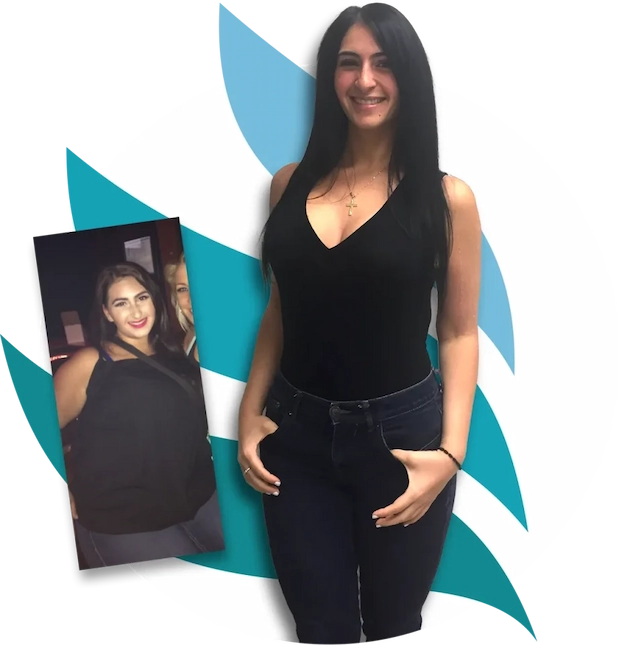
Kristen G.
Weight Lost: 100 Lbs.
Type of Procedure: Gastric Sleeve
“I am really proud of myself. I have tried diet after diet and struggled with my weight without success. The gastric sleeve was easy and the pounds seem to fly off. There was little discomfort and I was back to work quickly.”
What Weight Loss Options Can I Choose From?
Gastric Sleeve
The Gastric Sleeve removes a large portion of the stomach, so you feel full sooner and stay hungry less often.
Gastric Bypass
With Gastric Bypass, reduces stomach size and reroutes part of the small intestine, and is often the better choice for significant acid reflux.
MagDi
MagDi is a newer, less invasive alternative to Gastric Bypass or Gastric Sleeve, using magnetic compression instead of staples or sutures. It can be performed alongside Gastric Sleeve or afterward, for patients who need additional weight loss or haven’t reached their goal.
Revisional Bariatric Surgery
Revisional surgery is available for patients who’ve had a prior bariatric procedure and need a different approach now.
Weight Loss Injections and Medication
Our prescription weight loss program uses FDA-approved medications paired with nutrition and lifestyle coaching. Options include:
- Wegovy® (semaglutide): a weekly injection that reduces appetite and slows digestion, helping you feel full longer.
- Zepbound® (tirzepatide): a weekly injection that targets two hormone pathways, GLP-1 and GIP, to help control appetite.
- Mounjaro® (tirzepatide): like Zepbound, Mounjaro can also improve blood pressure and cholesterol levels beyond weight loss alone.
- Foundayo® (orforglipron): a newer once-daily pill that offers GLP-1 benefits without an injection.
- Contrave® (naltrexone-bupropion): an oral option that targets appetite and food cravings through a different mechanism than GLP-1 medications.
- Phentermine: a short-term appetite suppressant, often used as an accessible starting point for eligible patients.
How Do I Know Which Weight Loss Option Is Right for Me?
Four things guide the recommendation:
- Your BMI
- Any weight-related health conditions you have
- Your reflux and digestive history
- How much weight you need to lose to reach a healthier place
Patients with a lower BMI, or those who want to avoid surgery entirely, often start with medication and nutritional counseling. Patients carrying 100 pounds or more, or living with Type 2 diabetes, usually see more durable results from surgery. The two are not mutually exclusive: some patients use medication first and move to surgery later, and others use medication after surgery to support maintenance.
We talk through all of it in the consultation, including the trade-offs.
Am I a Good Candidate for Weight Loss Surgery?
National surgical guidelines recommend bariatric surgery for adults who:
- Have a BMI of 35 or higher, regardless of other health conditions
- Have a BMI of 30 to 34.9 along with a condition like Type 2 diabetes
Beyond the numbers, strong candidates for surgery are ready to commit to lasting changes in eating, activity, and follow-up care. Surgery may not be the right first step for patients with untreated substance use disorders, unstable psychiatric conditions, or medical issues that make anesthesia unsafe. Our evaluation includes a medical workup, nutritional assessment, and a discussion of your prior weight loss history, so nobody is pushed toward a procedure that does not fit. Take our candidacy quiz to see where you stand before your consultation.







Am I a Good Candidate for Weight Loss Injections and Medications?
FDA-approved weight loss medication is available to adults with a BMI of 30 or higher, or 27 or higher along with a weight-related condition like high blood pressure or Type 2 diabetes. Because the eligibility bar is lower, medication is often the right starting point for patients who don’t yet meet surgical criteria or who’d rather avoid surgery.
Good candidates are ready to commit to ongoing treatment, regular monitoring, and the lifestyle changes that make the medication work as intended. Our team reviews your health history and current medications during a consultation to confirm it’s a safe fit and rule out any conflicts.

Calculate Your Body Mass Index (BMI)
What Can I Expect After Treatment?
Our surgical procedures use minimally invasive laparoscopic and robotic techniques through small incisions, so the majority of patients go home within a day or two and return to desk work within 5-7 days. The first months follow a staged diet, from liquids to soft foods to solids, with vitamin supplementation for life. Many patients see Type 2 diabetes and high blood pressure resolve or improve, along with a better quality of life, in the years following surgery, and our team walks you through the full surgery recovery timeline so nothing catches you off guard.
Medication and injections follow a different path. Treatment starts at a low dose that increases gradually over several weeks so your body can adjust, and mild nausea or other digestive changes are common early on. Health improvements can show up before significant weight loss does: in a large clinical trial, weekly semaglutide meaningfully lowered the risk of heart attack, stroke, and cardiovascular death in patients with existing heart disease. Your care team checks in regularly to monitor your progress and adjust your plan as needed.
Results vary from person to person, and our nutritionist and support programs stay with you well past your treatment date.
Why Should I Choose Dr. Atwa and Long Island Laparoscopic Doctors?
At Long Island Laparoscopic Doctors, we bring together surgical and medical weight loss expertise under one roof, so our care team can guide you no matter which path fits you best.

Dr Hesham Atwa
Dr. Hesham Atwa, M.D., FACS, FASMBS, DABS-FPMBS, founded Long Island Laparoscopic Doctors and has performed over 22,000+ procedures, including over 2,500 robotic surgeries. Those numbers matter for a specific reason: volume and robotic experience let a surgeon operate precisely on complex anatomy, including revisions of prior procedures that other practices decline.
He is a Master Surgeon in Robotic Surgery and a Master Hernia Surgeon, and he serves as Chief of Surgery at Mather Northwell Health Hospital and as Director and Chief of Surgery, Director of Robotics Surgery, and President of Medical Staff at St. Charles Hospital.

Dr. Elieen Barr
Dr. Eileen Barr, D.O., leads our prescription weight loss program. She has practiced internal medicine in Suffolk County for over 25 years, completed additional training in obesity medicine at Harvard’s Blackburn course, and is a Diplomate of the National Board of Osteopathic Medical Examiners. She’s been honored with the Theodore Roosevelt Award from Mather Memorial Hospital, where she also served as medical staff president, and was named Woman of the Year in Medicine by the Town of Brookhaven.
Dr. Barr treats weight loss as part of your whole health picture, not on its own. Using body composition analysis, bloodwork, and a full medical review, she builds a personalized plan that may include adjusting your current medications or adding new ones to support your progress. She’s an active member of the Obesity Medicine Association and the Obesity Action Coalition.
You’re never on your own in this.
Our care team includes a coordinator who stays with you throughout the entire process, so you always have support and a clear next step.
We do not judge where you have Been.
We help you decide where to go Next.
What Do Patients Say About Their Weight Loss Journey?
I want to give a great thanks to Dr. Atwa and his staff. My life changed for the better. I lost 45 pounds in less than six months after surgery, and I'm expecting to lose another 40 pounds in the next six months. I stopped taking my type 2 diabetes and cholesterol medications, and lowered my blood pressure medication to less than half the dose. Surgery was very simple: only one night in the hospital and one week at home. I strongly advise anybody overweight to consider sleeve gastric surgery. You will feel the difference. Thank you very much, Dr. Atwa.
Working with Dr. Barr has been and still is a fantastic experience for me. I have dieted for what feels like my entire life, to no avail. Since I met Dr. Barr 10 months ago, I am the happiest I have been in a long time with the success I have had. Dr. Barr is a professional and caring doctor. I can't thank her enough for my better health.
Dr. Atwa is the most responsible and caring surgeon there is. Any questions or concerns I had, he answered quickly, and he made me feel comfortable from the moment I met him through my surgery. I never thought I would be walking and going home as fast as I did right after surgery. I haven't reached for my inhaler in three weeks, and I already lost 17 pounds in three weeks. I highly recommend Dr. Atwa and the staff. Thank you for the care you gave me and continue to give me.
Dr. Barr is simply amazing! She is extremely compassionate, knowledgeable, and generous with her time and talents. She is incredibly invested in her patients and wants them to succeed. I absolutely love her.
I would highly recommend this practice. Dr. Atwa did the sleeve for me, which was very successful. I would trust no other.
The staff are polite and respectful to all patients. Dr. Barr's attention to detail and the oversight of all medical parameters is beyond reproach. I highly recommend this location for your medical weight loss and surgical needs.
I have been going to Dr. Atwa since 2022 and have always had a pleasant experience with him and his staff. Would highly recommend.
What Else Do Patients Ask About Weight Loss?
Does insurance cover weight loss surgery?
Many insurance plans do cover bariatric surgery when documented medical criteria are met, though requirements differ by plan. Our team checks your benefits before you commit to anything, and self-pay pricing is available if you don’t have coverage. Some patients choose self-pay even when they do have insurance, since it can skip the prior-authorization process and get you to surgery faster, or help if you don’t meet your plan’s specific criteria for coverage.
How much does weight loss surgery cost?
Cost depends on your individual treatment plan, including which procedure you choose and whether your insurance covers it. Our team walks you through your insurance and financing options during your consultation, so you know your costs before you commit to anything.
What’s the difference between Gastric Sleeve and Gastric Bypass?
Both are effective, long-term weight loss procedures we perform regularly. The practical differences come down to recovery and health history: Gastric Sleeve involves no intestinal rerouting, so recovery tends to be more straightforward, while Gastric Bypass’s added rerouting can offer a stronger option for significant acid reflux or a higher BMI. We’ll walk you through which fits your situation during a consultation.
Is it better to try weight loss injections or have surgery?
There’s no universal answer. Medication can be a good starting point for patients with a lower BMI or who want to avoid surgery, while surgery tends to produce more durable results for patients with more weight to lose or health conditions like Type 2 diabetes. Many patients use both, in different orders, depending on their goals.
How soon do surgery patients start losing weight?
Most surgical patients see the fastest results in the first six months after surgery. A 2022 study of over 18,000 patients found that weight loss typically continues, more gradually, into the second year, so a slower stretch later on is a normal part of the process, not a sign anything is wrong.
Can I have my weight loss consultation by telehealth?
Yes. We now offer telehealth appointments, which many patients use for their first consultation and for routine follow-up visits between in-person appointments.
What happens if I had a gastric band in the past?
We no longer recommend the gastric band as a new procedure. We do, however, help people who’ve previously had one, through band removal and revision procedures that convert to a Sleeve or Bypass when appropriate.
Ready to Get Started?
The Journey to the New You Begins Here! Our experienced team of bariatric surgeons and weight loss experts serves patients throughout Long Island, NY, Setauket-East Setauket, and Suffolk County, NY, and we are here to answer your questions before you decide anything.
Book Online or Request a Consultation to talk through your surgical and non-surgical options. Now offering telehealth appointments.

- Centers for Disease Control and Prevention. Adult Obesity Facts. cdc.gov/obesity/adult-obesity-facts
- American Society for Metabolic and Bariatric Surgery. Benefits of Metabolic and Bariatric Surgery. asmbs.org/benefits-of-weight-loss-surgery
- Centers for Disease Control and Prevention. Steps for Losing Weight. cdc.gov/healthy-weight-growth/losing-weight
- Wilding JPH, et al. Once-Weekly Semaglutide in Adults with Overweight or Obesity (STEP 1). NEJM. 2021;384(11):989-1002. doi.org/10.1056/NEJMoa2032183 PMID 33567185.
- Jastreboff AM, et al. Tirzepatide Once Weekly for the Treatment of Obesity (SURMOUNT-1). NEJM. 2022;387(3):205-216. doi.org/10.1056/NEJMoa2206038 PMID 35658024.
- Eisenberg D, et al. 2022 ASMBS and IFSO Indications for Metabolic and Bariatric Surgery. Obesity Surgery. 2023;33(1):3-14. doi.org/10.1007/s11695-022-06332-1 PMID 36336720.
- U.S. Food and Drug Administration. FDA Approves New Medication for Chronic Weight Management. Published November 8, 2023.https://www.fda.gov/news-events/press-announcements/fda-approves-new-medication-chronic-weight-management
- Schauer PR, et al. Bariatric Surgery versus Intensive Medical Therapy for Diabetes, 5-Year Outcomes (STAMPEDE). NEJM. 2017;376(7):641-651. doi.org/10.1056/NEJMoa1600869 PMID 28199805.
- Lincoff AM, Brown-Frandsen K, Colhoun HM, et al. Semaglutide and Cardiovascular Outcomes in Obesity without Diabetes. N Engl J Med. 2023;389(24):2221-2232. doi.org/10.1056/NEJMoa2307563. PMID 37952131.
- Tettero OM, Monpellier VM, Janssen IMC, Steenhuis IHM, van Stralen MM. Early Postoperative Weight Loss Predicts Weight Loss up to 5 Years After Roux-en-Y Gastric Bypass, Banded Roux-en-Y Gastric Bypass, and Sleeve Gastrectomy. Obes Surg. 2022;32:2891-2902. doi.org/10.1007/s11695-022-06166-x
The doctors at Long Island Laparoscopic Doctors have either authored or reviewed and approved this content.
Page Updated: