Benefits, Recovery and What to Expect
“When my doctor told me I needed colon surgery, I immediately pictured a large incision, weeks of pain, and months before life felt normal again.”
That’s how Mark, a 58-year-old father of three, described his mindset after learning that a portion of his colon needed to be removed because of recurrent diverticulitis. Like many of Dr. Hesham Atwa’s patients, his understanding of colon surgery came from stories he’d heard decades ago that included large incisions, long hospital stays, and difficult recoveries.
Then Dr. Atwa shared something that completely changed his perspective. “Your surgery will be performed using a minimally invasive robotic approach.” Mark was surprised and paused. “So…the robot does the surgery?”
Dr. Atwa smiled. “No. I do. The robot simply gives me better vision, greater precision, and more control.”
As a Master Surgeon in Robotic Surgery who has performed more than 2,500 robotic procedures, Dr. Atwa has extensive experience using advanced robotic technology to perform complex colorectal operations with remarkable precision.
A few days after surgery, Mark was walking the hospital halls. Within weeks, he was back to spending time with his family and enjoying the activities he loves.
Dr. Atwa shares stories like Mark’s because they reflect what he sees every day at Long Island Laparoscopic Doctors in Long Island, NY. Patients often arrive expecting the worst, but leave feeling informed, and reassured about what modern robotic colon surgery can offer.
What Is Robotic Colon Surgery?
As you likely know, despite its name, robotic colon surgery does not mean a robot performs the operation independently. Every movement is directed by the surgeon from beginning to end.
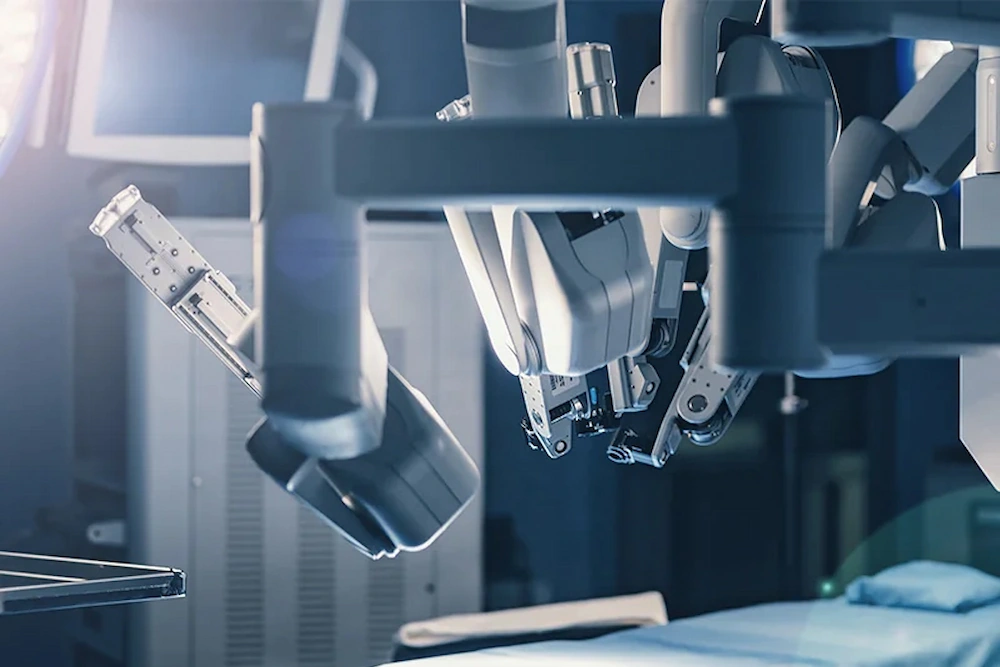
Using the da Vinci® Surgical System, Dr. Hesham Atwa sits at a specialized console just a few feet from the operating table and controls tiny surgical instruments through several very small incisions. The robotic platform provides magnified, three-dimensional visualization, and allows the instruments to move with wrist-like flexibility beyond what the human hand can achieve.
This advanced minimally invasive technology is especially valuable during colorectal surgery, where surgeons often work within the narrow confines of the pelvis while carefully protecting nearby nerves, blood vessels, and healthy tissue. The enhanced precision can make a meaningful difference during complex procedures.
Why Might Someone Need Colon Surgery?
Colon surgery may be recommended for a variety of conditions, including:
- Colon cancer
- Large or difficult-to-remove polyps
- Recurrent diverticulitis
- Crohn’s disease
- Ulcerative colitis
- Bowel obstruction
- Certain benign colon tumors
Regardless of the diagnosis, the goal remains the same. That is to remove the diseased portion of the colon while preserving as much healthy bowel as possible.
Every patient’s anatomy, medical history, and condition are unique. That’s why Dr. Hesham Atwa believes a thorough evaluation with an experienced colorectal surgeon is essential before determining the most appropriate surgical approach.
Why Dr. Atwa Often Recommends Robotic Colon Surgery
While robotic surgery isn’t the right choice for every patient, it offers significant advantages for many individuals.
Rather than making one large abdominal incision, Dr. Hesham Atwa typically performs surgery through several small incisions. This minimally invasive approach often results in:
- Less disruption to healthy tissue
- Less postoperative discomfort
- Smaller scars
- Lower risk of certain wound complications
- Greater surgical precision
- Better visualization during complex procedures
The enhanced precision is particularly important when operating near delicate nerves and other critical structures that affect bowel function and overall recovery.
What Does Recovery Actually Look Like?
One of the most common questions patients ask is “How long until I feel like myself again?”
The honest answer depends on several factors, including your overall health, the reason for surgery, and the complexity of the procedure.
What surprises many patients, however, is how quickly recovery begins.
Dr. Hesham Atwa’s experienced team typically encourages patients to get out of bed and begin walking as soon as it is safe to do so. Patients gradually progress from liquids back to regular foods while continuing gentle movement and deep breathing exercises. Early walking helps stimulate bowel function, lowers the risk of blood clots, and supports the body’s natural healing process.
Hospital stays vary depending on the procedure performed and each patient’s individual health. However, many patients undergoing minimally invasive robotic colon surgery are able to return home sooner than they anticipated. While complete healing takes several weeks, many people resume normal daily activities much earlier than they expected.
Is Robotic Colon Surgery Right for Everyone?
The short answer is, not necessarily. Dr. Hesham Atwa is always transparent when another approach may be more appropriate. Previous abdominal surgeries, body type, the location of the disease, overall health, and the complexity of the condition all play important roles in determining the safest surgical plan.
For some patients, robotic surgery is clearly the best option. For others, laparoscopic surgery or a traditional open procedure may provide the safest and most effective treatment.
Ultimately, the most important factor isn’t the technology itself. Rather, it is choosing a surgeon with the experience to determine which approach is best for your individual situation.
Looking Beyond the Surgery
In Dr. Hesham Atwa’s experience, what weighs on patients most isn’t the operation itself. It is the uncertainty leading up to it.
Will I be in pain? How long will recovery really take? Will I be able to get back to my normal life?
Advances in minimally invasive robotic colon surgery have helped many patients recover more comfortably, spend less time in the hospital, and return to the people and activities they love sooner than they ever imagined.
Like Mark, many patients begin their journey expecting the worst. Dr. Atwa’s goal is to help them leave their consultation with something far more valuable: confidence that they understand their options and can move forward with peace of mind.
Schedule a Consultation
If you’ve been told you may need colon surgery, robotic colectomy, or another form of colorectal surgery, the first step is a comprehensive consultation.
Dr. Hesham Atwa will carefully evaluate your condition, explain all available treatment options, and determine whether a minimally invasive robotic approach using the da Vinci® Surgical System is appropriate for your individual needs.
Every treatment plan is personalized with one goal in mind. To provide the safest operation possible while helping you recover comfortably and return to living your life. If you desire more information or want to schedule a consult, visit https://journeytothenewyou.com/contact-us/
References
- Society of American Gastrointestinal and Endoscopic Surgeons (SAGES). Patient Information: Colon Resection Surgery. https://www.sages.org
- American College of Surgeons. Colectomy: Patient Education. https://www.facs.org/